White Water Rafting in Rishikesh: Routes, Prices & Everything You Need to Know
If you're planning a trip to Rishikesh, chances are rafting is already somewhere on your list.
And if you've never done it before, you might be wondering which route to pick, how much it costs, whether it's actually safe, or even what you're supposed to wear.
The good thing is that you don't have to figure all of that out yourself.
Rishikesh has several rafting routes, starting with shorter stretches for beginners and going all the way up to long, physically demanding routes for experienced rafters.
You can explore Rishikesh adventures on Bucketlistt and compare the options before deciding what works for you.
Prices generally start around ₹1,500 and can go up to ₹6,000 or more depending on the route and package.
Here's everything you should know before booking.
Which Rafting Route Should You Choose?
The biggest mistake first-time rafters make is assuming that the longest route must be the best one.
It isn't.
The right route really depends on how comfortable you are in the water and how much adventure you're looking for.
9 km Brahmpuri Route
If you've never been rafting before, the 9 km Brahmpuri to NIM Beach route is a good place to start.
It's a Grade I–II route, so the rapids are relatively gentle compared with the longer stretches. The whole experience usually takes around 1.5 to 2 hours on the water.
You'll still get plenty of splashing, paddling and the feeling of being carried through the Ganga, but it isn't as physically demanding as the longer routes.
It's a popular choice for families, beginners and anyone who isn't quite sure how they'll feel once they're actually in the river.
Approx. price: ₹1,500–₹2,000 per person
16 km Shivpuri Route
The 16 km Shivpuri to NIM Beach route is probably the most popular option.
It's a Grade II–III route, so you get bigger and more exciting rapids without committing to a full-day rafting experience.
The trip generally takes around 2.5 to 3 hours and includes rapids such as Roller Coaster, Golf Course, Club House and Double Trouble.
If you're travelling with friends and want something that feels adventurous but isn't extremely demanding, this is probably the route I'd look at first.
Approx. price: ₹2,000–₹2,500 per person
You might also be interested in: Book Rishikesh Camping
24 km Marine Drive Route
Want something a little more challenging?
The 24 km Marine Drive to NIM Beach route takes things up a notch. It's around Grade III–III+, so you'll spend more time paddling and dealing with stronger rapids.
You don't necessarily need to be an expert, but being reasonably fit and comfortable in the water definitely helps.
Approx. price: ₹2,500–₹4,000 per person
35 km Kaudiyala Route
The 35 km Kaudiyala to NIM Beach route is for people who want a serious rafting experience.
It's a Grade III–IV route and can take around 5 to 6 hours. You'll encounter bigger rapids such as The Wall, Daniel's Dip, Three Blind Mice and Golf Course.
This isn't something I'd recommend as your first rafting experience.
You'll be paddling for a long time, and the route requires considerably more stamina than the shorter options.
Approx. price: ₹3,500–₹6,000 per person
There are also multi-day rafting expeditions, including 100 km routes, but those are a completely different experience and usually involve camping as well.
How Much Does Rafting in Rishikesh Cost?
Here's a rough idea of what you can expect:
Route | Difficulty | Approx. Price |
|---|---|---|
9 km Brahmpuri | Grade I–II | ₹1,500–₹2,000 |
16 km Shivpuri | Grade II–III | ₹2,000–₹2,500 |
24 km Marine Drive | Grade III–III+ | ₹2,500–₹4,000 |
35 km Kaudiyala | Grade III–IV | ₹3,500–₹6,000 |
Prices can vary depending on the operator, season and what's included in the package.
So don't just look at the cheapest number.
Check whether transport, meals, safety equipment, photography and other inclusions are part of the price.
What Should You Carry for Rafting?
You don't need to pack much.
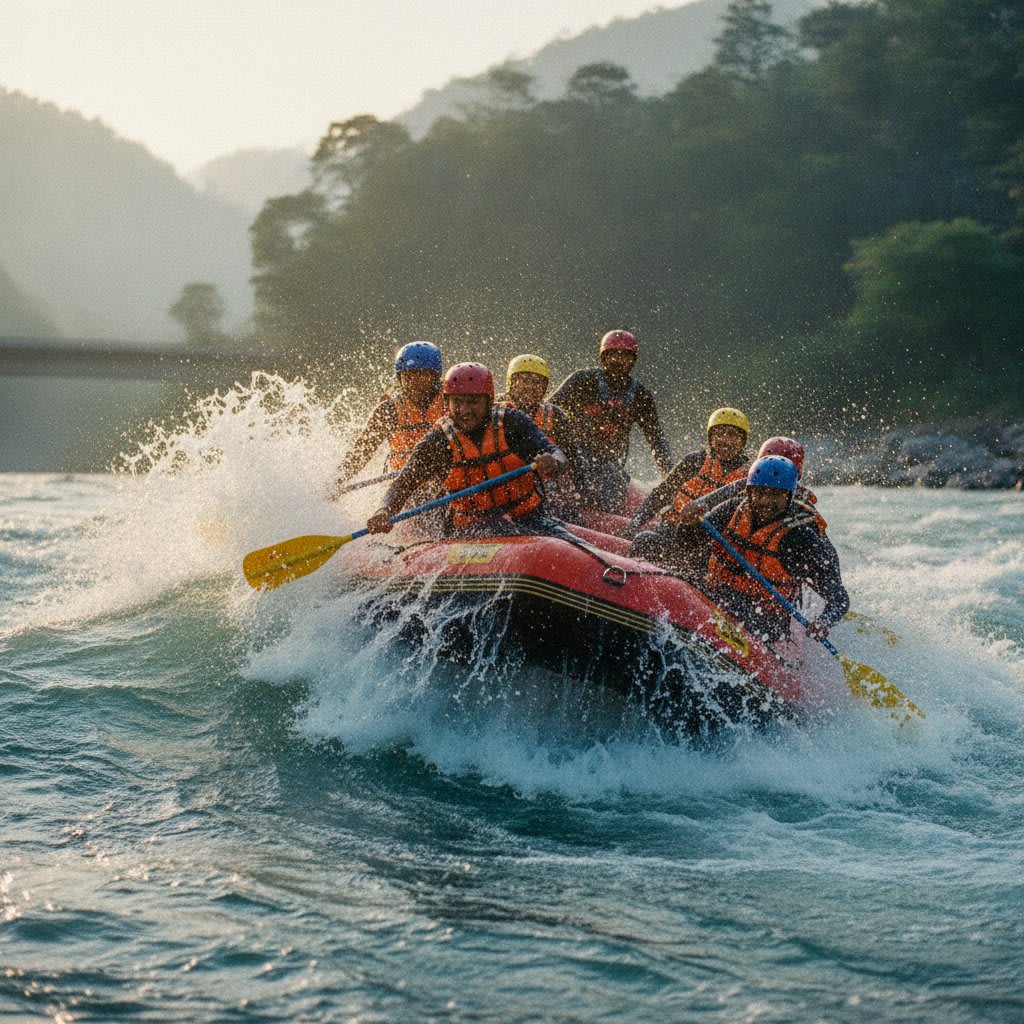
The operator normally provides the main rafting equipment, including the raft, paddle, helmet and life jacket.
You should carry:
Quick-dry clothes
A change of clothes
Towel
Sunscreen
Water shoes or sandals with proper straps
Waterproof pouch for your phone
Government-issued ID
Some cash
One thing I'd definitely avoid is loose footwear.
Flip-flops can come off pretty easily once you're in the water, so wear something that actually stays on your feet.
And don't take expensive jewellery or anything you don't want to risk losing.
Is Rafting in Rishikesh Safe?
Yes, rafting with a reliable operator can be a safe experience, but it's still an adventure activity and you shouldn't take the safety briefing lightly.
Before you get into the raft, your guide should explain basic paddle commands, how to sit and what to do if someone falls into the water.
Pay attention.
It might feel like a boring five-minute briefing when you're excited to get started, but once the raft hits a proper rapid, you'll be glad you listened.
Make sure your helmet and life jacket fit properly and stay on throughout the trip.
If you're doing one of the more difficult routes, you should also be comfortable in the water and physically capable of paddling for several hours.
And don't drink alcohol before or during the activity.
Pro tip: Ask your operator about guide credentials and rescue equipment before booking. Established operators hold certifications from organizations like the Indian Institute of Adventure Sports (IIAS). This matters more than you'd think.
You might also be interested in: Rent a Bike Now
How to Choose a Rafting Operator
Don't automatically go with the cheapest operator you find.
Before booking, ask a few basic questions:
Which route are you taking?
What difficulty grade is it?
How experienced are the guides?
What safety equipment is provided?
Is transportation included?
Is photography included?
What happens if weather or river conditions force a cancellation?
A package that's ₹300 cheaper isn't really a better deal if you later discover that transport or other essentials aren't included.
Best Time for Rafting in Rishikesh
October to March is generally a good time to go rafting in Rishikesh.
The weather is pleasant and the river conditions usually make for a good rafting experience.
During the monsoon months, particularly June to September, heavy rainfall can raise the water level significantly. Rafting operations may be closed during this period depending on conditions.
April and May can be warmer, while water levels may be lower.
The river doesn't behave exactly the same way throughout the year, so if you're travelling outside the main rafting season, check the current conditions with your operator before booking.
If you're visiting during December or January, it's also a good idea to book ahead because these months can get busy.
What Else Can You Do in Rishikesh?
The nice thing about Rishikesh is that rafting doesn't have to be your entire trip.
You can spend the morning on the river and then do something completely different later in the day.
Visit Parmarth Niketan and attend the evening Ganga aarti.
Walk around Lakshman Jhula or Ram Jhula.
Try some of the cafes around Tapovan.
Or, if you have another day, explore one of the waterfalls around Rishikesh such as Neer Garh or Phool Chatti.
There's a good mix of adventure, nature and slower experiences here, which is probably why people end up staying longer than they originally planned.
You can also explore more Rishikesh adventures on Bucketlistt.
A Few Things to Remember Before You Go
Keep your rafting day simple.
Carry a change of clothes because you are going to get wet.
Keep your phone and valuables in a proper waterproof pouch.
Carry your ID.
Ask about photography before the trip if you want photos or videos.
And don't feel like you have to choose the longest route just because someone says it's the "best" one.
If you're a beginner, the 9 km or 16 km routes can be more than enough.
If you've rafted before and want something more intense, then look at the 24 km or 35 km options.
The best route is simply the one that matches what you're comfortable with.
If you want a curated list of verified operators and activity packages, you can browse options on Bucketlistt.
Frequently Asked Questions
What is the best time to go river rafting in Rishikesh?
October to March is generally considered a good time for rafting. The weather is pleasant and the river conditions are usually suitable for the activity. During the monsoon, rafting may be stopped because of higher water levels.
How much does river rafting in Rishikesh cost?
Rafting usually starts at around ₹1,500 for the 9 km route. The 16 km route generally costs around ₹2,000–₹2,500, while longer routes such as the 35 km Kaudiyala route can cost ₹3,500–₹6,000 or more.
Is river rafting in Rishikesh safe for beginners?
Yes. Beginners can start with the 9 km Brahmpuri route, which has gentler rapids. If you're unsure about your comfort level in the water, it's better to start with an easier route.
What should I wear for rafting in Rishikesh?
Wear comfortable quick-dry clothes and secure footwear. Avoid loose flip-flops because they can easily come off in the water.
What should I carry for rafting?
Carry sunscreen, a towel, change of clothes, secure footwear, a waterproof pouch for your phone and a government-issued ID. The operator generally provides the main rafting equipment.
How long does rafting in Rishikesh take?
The 9 km route usually takes around 1.5–2 hours on the water. The 16 km route takes around 2.5–3 hours, while the 24 km and 35 km routes can take several hours depending on conditions.
Can non-swimmers go rafting in Rishikesh?
Some beginner routes may allow non-swimmers, but you should always tell your guide about your swimming ability before starting. Don't assume that every rafting route is suitable for non-swimmers.
What is the most popular rafting route in Rishikesh?
The 16 km Shivpuri to NIM Beach route is one of the most popular choices because it gives you a good mix of adventure and accessibility without being as demanding as the longer routes.
Are there discounts for group rafting bookings?
Some operators offer discounts for larger groups. If you're travelling with six or more people, ask the operator whether they have a group rate and exactly what is included in it.